
Quick Answer
Utility Billing Regulations by State: The Short Version
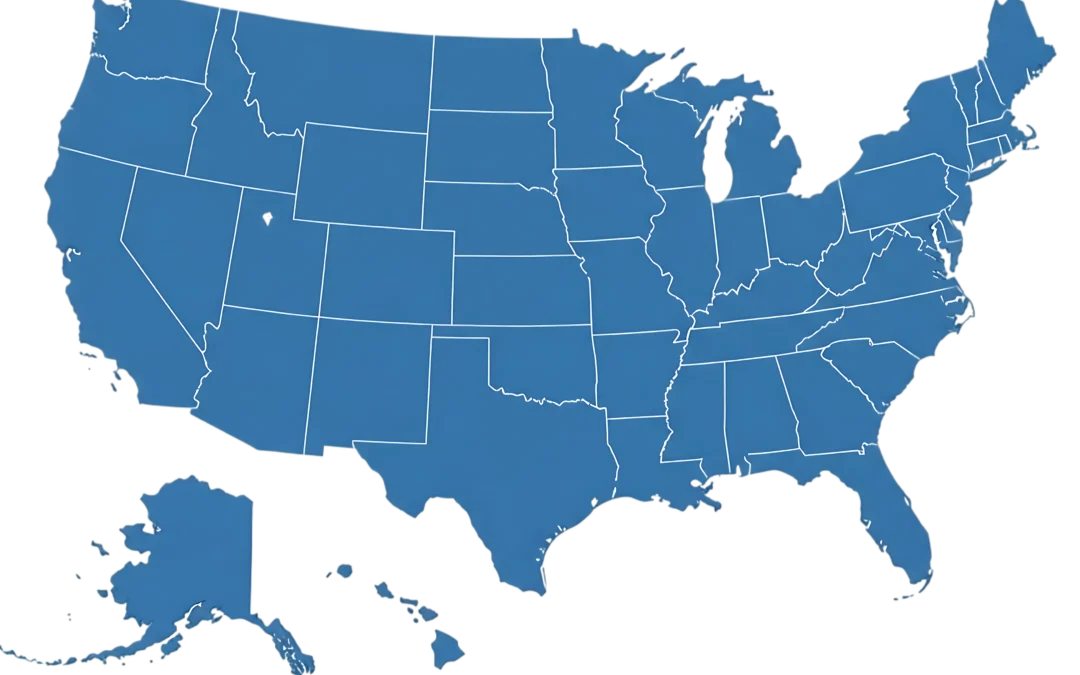
Utility billing is regulated at the state level through public utility commissions (PUCs) and, for municipally owned utilities, by local ordinance. While no single federal law governs utility billing end-to-end, overlapping federal frameworks including the Fair Credit Billing Act, Regulation Z, and the Equal Credit Opportunity Act establish a compliance floor. States then layer on requirements for rate transparency, disconnection notice, deferred payment plans, smart metering, and fee disclosure. Since October 18, 2025, qualifying utilities under MCC 4900 can also implement a Visa Service Fee on card transactions, but whether that fee is permissible in your state depends on your PUC tariff, your state’s surcharge law, and proper customer disclosure. There is no one-size-fits-all answer: every utility needs to know what its own state demands.
Utility Billing Regulations by State: What Every Utility Needs to Know in 2025–2026
By Dale Erling | 15+ Years of Payments & Fintech Experience | ~16 minute read | Updated April 2026
Utility billing is not a federal free-for-all. Every state has its own set of rules, some simple, some dense enough to give a compliance officer a migraine. If you run billing for a municipal utility, a water district, or an investor-owned electric company, you are not just trying to get paid. You are doing it inside a web of state PUC requirements, consumer protection statutes, infrastructure mandates, and, increasingly, payment fee program rules that did not exist two years ago.
This guide walks through what is changing state by state, what federal rules set the floor, and where service fees on card transactions fit into the picture, without repeating what we have already covered in depth elsewhere on payment program mechanics.
Why Utility Billing Regulations Are Changing Right Now
Utility billing has been relatively static for decades. Paper bills went out. Customers paid. Regulators kept an eye on rates. But three things collided over the last several years that are forcing utilities, and their state regulators, to rewrite the playbook:
Smart meter rollouts. Replacing manual reads and estimated billing with real-time usage data changes what a utility is legally obligated to show on a bill, and how quickly billing disputes must be resolved.
Infrastructure investment cycles. Lead service line replacements, wastewater system upgrades, and drought resilience projects all require passing costs to ratepayers in transparent, defensible ways. States are tightening how utilities justify those charges.
Digital payment adoption. Online and mobile bill payment is now the norm, not the exception. That shift has forced regulators to revisit fee disclosure, electronic bill delivery, and the legality of charging customers for the payment method they prefer.
The result is a wave of new and updated state rules. What follows is a practical summary of where the most significant changes are happening, and what they mean for utility billing operations.
The Federal Framework: What Washington Actually Controls
Before diving into state rules, it helps to understand what federal law does and does not do. The federal government does not directly regulate utility rates or billing formats for most water, gas, and electric providers. That authority lives with state PUCs and municipal governments. What federal law controls are the financial and credit-related aspects of how bills are handled when payment goes wrong.
Key federal frameworks affecting utility billing:
Fair Credit Billing Act (15 U.S.C. § 1666) — Requires prompt written acknowledgment of billing disputes and mandates investigation before adverse credit action. Enforced by the Federal Trade Commission.
Regulation Z, 12 CFR Part 1026 § 1026.13 — Governs billing error resolution for consumer credit accounts. Managed by the Consumer Financial Protection Bureau.
Equal Credit Opportunity Act — Limits how utilities can apply credit history requirements for deposits; relevant where a spouse’s or roommate’s delinquent history affects a new applicant.
Electronic Fund Transfer Act — Governs ACH and debit card payment disputes, which are increasingly common as utilities expand digital payment channels.
These federal layers matter most when a customer disputes a charge or when a utility wants to report non-payment to a credit bureau. For day-to-day billing, rates, formats, disconnection rules, fee disclosures, the action is at the state level.
State-by-State: What Is Changing and Why It Matters for Billing
Each state entry below focuses on regulatory changes that affect billing operations, not just infrastructure headlines. Rate cases and environmental programs matter, but what utility billing teams need to know is how those changes show up on a statement and what compliance obligations follow.
California
California’s Public Utilities Commission is one of the most active in the country. Smart meter authorization is already in place, and the CPUC now requires utilities to itemize on residential billing statements the portion of charges attributable to state-mandated programs and requirements, including energy efficiency surcharges and public purpose programs. The mandate for visible, quarterly disclosure of state-required cost drivers took effect with AB 1295.
For billing teams, this means line-item transparency is not optional. Bills must identify what customers are paying for, and why, in plain language. Utilities that use third-party billing agents are also required to disclose that agent’s name and contact information directly on the bill.
Oregon
Oregon has moved toward some of the most explicit pre-disconnection requirements in the country. Before a utility can move toward shut-off, it must flag the account as non-payment, issue a defined sequence of warnings and alerts, and actively track whether a customer has entered into a deferred payment arrangement. The intent is to prevent disconnection where a workable payment plan exists. For billing software and operations teams, this means maintaining deferred arrangement records that are visible to disconnection workflows; a manual workaround is not compliant.
Washington
Washington is pushing smart meter adoption for water utilities specifically, with usage tracking designed to help identify distribution system leakage, a significant cost driver. The state is also updating its water system planning rules for drought scenarios. Both changes affect how usage data is collected, how bills are calculated, and what a utility must communicate to ratepayers about system conditions affecting their costs.
New York
New York requires utilities to provide advance notice when proposing rate increases, giving customers and regulators an opportunity to weigh in before a rate change takes effect. The state also maintains one of the most complex credit card surcharge environments in the country. As of February 2024, New York law was amended to prohibit the display of a separate surcharge line item, a rule that effectively conflicts with standard card brand disclosure requirements.
Utilities operating in New York should review their payment fee disclosure approach carefully. A service fee structured and disclosed correctly at point of payment may be treated differently than a surcharge added after the fact. This is not a hypothetical risk: the New York Division of Consumer Protection has issued specific guidance and examples of prohibited practices.
Pennsylvania
Pennsylvania requires water utilities to file Long-Term Infrastructure Improvement Plans (LTIIPs) before passing infrastructure investment costs on to ratepayers. Rate increases tied to water main improvements cannot simply appear on a bill; they must be preceded by an approved plan and separate line-item disclosure. This is a billing format requirement as much as it is a regulatory one. Utilities that have not updated their billing systems to accommodate LTIIP surcharges as distinct line items are potentially non-compliant.
New Jersey
New Jersey’s 2021 law mandating full replacement of lead service lines is working its way through billing as either base rate increases or separately itemized surcharges, depending on how each utility chose to structure cost recovery. If your utility uses a surcharge model, that amount must be clearly identified on every bill for every ratepayer, not buried in a general “infrastructure fee” line. Billing systems that do not support dynamic surcharge line items by account type may create compliance exposure here.
Texas
Texas presents an interesting tension for payment fees. State law (Section 339.001 of the Texas Finance Code) has historically banned surcharges, but federal courts have found portions of that ban unconstitutional. Convenience fees and service fees, structured correctly with proper disclosure, are generally permissible when they are uniformly applied and not framed as a surcharge.
For Texas utilities considering a Visa Service Fee program, the legal status is favorable but nuanced. The fee must be disclosed before payment, uniformly applied to all card transactions, and not described as a “surcharge” in any customer-facing language. Water stress and drought-related rate pressures are also an ongoing reality in Texas, making cost recovery mechanisms, including payment fee programs, increasingly relevant to budget planning.
Florida
Florida has approved Distributed Wastewater Treatment Systems as an alternative to septic tanks, eliminating the need for individual permits from the Department of Environmental Protection for qualifying replacements. This affects billing in communities transitioning from septic to municipal sewer service; new connection fees, monthly service charges, and potential surcharges for the expansion all need to be communicated clearly when the billing relationship begins. First-bill accuracy is essential because disputes over new utility service initiation are among the most common consumer complaints filed with state PUCs.
Illinois
Illinois now allows customers to opt for electronic utility bills, with municipalities required to deliver paper or digital format based on customer preference. This sounds simple, but it has compliance implications: billing systems must maintain verified delivery preference records, and a utility cannot assume a customer defaulted to electronic delivery without explicit consent. Missed or undelivered electronic bills have triggered disputes in other states where e-billing rollouts moved faster than consent documentation.
Wisconsin
Wisconsin’s Clean Water Fund Program has been providing low-interest loans for water infrastructure since 1991. Interest rate reductions effective January 2026 will reduce some utilities’ debt service costs, which in theory should moderate rate pressures. For billing transparency, utilities using CWFP financing are expected to reflect cost changes accurately when rate adjustments follow loan refinancing. The state has historically been proactive about requiring utilities to pass loan savings through to ratepayers.
Arizona
Arizona’s Advanced Water Purification program, converting treated wastewater into potable drinking water, will result in new cost structures appearing on water bills, either as surcharges for purification center construction or as adjustments to existing wastewater rates. For billing operations, the challenge is communicating what is a genuinely unfamiliar charge to ratepayers in a way that is transparent, legally defensible, and does not trigger a wave of disputes. Plain-language explanations tied to specific program authority are the standard approach.
Michigan
Michigan has been active on two fronts relevant to billing. The Michigan Public Service Commission recently approved new tariff provisions for large-load customers (particularly data centers), requiring explicit cost separation to prevent cross-subsidization of residential ratepayers. At the same time, legislation was introduced, though not yet passed, that would prohibit utilities from charging customers a fee for paying by debit or credit card. Michigan utilities considering or currently using payment fee programs should watch this bill’s progress carefully.
Service Fees for Utilities: The State-Law Layer That Cannot Be Ignored
The October 2025 expansion of Visa’s Service Fee Program to MCC 4900 utilities opened a door that many utility finance teams have been waiting for. Being able to pass card processing costs to the paying customer, rather than absorbing them into the operating budget, is a meaningful budget lever. But the card network rule change is only one layer of the compliance stack. State law is the other, and it does not automatically follow Visa’s lead.
Here is how the state-level service fee landscape breaks down in practical terms:
Surcharges prohibited (credit card): Connecticut, Massachusetts, Maine (private merchants), Puerto Rico. Surcharge-style fees are restricted; service fee program eligibility under state law requires legal review before implementation.
Complex / nuanced surcharge rules: New York, Texas, Oklahoma (pending), Hawaii. Disclosure format and fee labeling are critical; “service fee” framing is generally safer than “surcharge” language.
Surcharges permitted with cap: Colorado (2%), Minnesota (up to 5%, disclosure required), most other states (up to 3–4%). Fee percentage must stay within state caps; variable service fee rates should be tested against state maximums at go-live.
PUC tariff approval may be required: Varies by state and utility type (IOU vs. municipal). Investor-owned utilities may need to file a tariff amendment before activating any new payment fee; municipal utilities generally have more flexibility.
Debit card fees prohibited: All 50 states (federal prohibition). A service fee under the Visa program applies to Visa consumer debit, prepaid, and credit, but debit surcharge rules are distinct. Utilities must ensure fee disclosure clearly covers all card types and is shown before the customer completes payment.
One point that often trips up utility teams: the Visa Service Fee program permits the fee to be charged on debit, prepaid, and credit Visa cards, but state surcharge law in many jurisdictions only limits surcharges on credit cards. Debit card surcharges are prohibited federally under the Electronic Fund Transfer Act for non-governmental merchants, but utilities and government entities have historically operated under different interpretations. Getting this wrong is not just a compliance issue, it is a customer trust issue that will show up in your disconnection-related complaint volume.
Consumer Protections That Affect How You Bill, and When
Across the country, state PUCs and legislatures have layered in consumer protections that are not just about rates; they directly affect billing operations, disconnection timing, and how a utility must respond to customer claims. Most state utility consumers’ bills of rights share a common core:
Pre-disconnection notice requirements. Nearly every state requires written notice, by mail, phone, or electronic means, before service is terminated for non-payment. The timing window varies (typically 10–30 days) and often resets when a customer initiates a payment plan or dispute.
Deferred payment plan protections. States including Nevada, Oregon, and Texas require utilities to offer deferred payment arrangements and prohibit disconnection while an active plan is in place. This is not a courtesy, it is an enforceable right. Billing systems need to flag these arrangements before any disconnection workflow begins.
Medical and hardship protections. Most states prohibit disconnection during extreme weather events and may extend protections to customers with documented medical conditions. Texas, for example, requires a 63-day minimum protection period for customers with a critical medical condition on file.
Deposit limitations. The Equal Credit Opportunity Act, combined with state-specific rules, limits how much a utility can charge as a deposit and on what basis. Nevada explicitly allows deposit installment payments for customers with poor credit.
Bill accuracy and dispute rights. All states give customers the right to contest a bill they believe is in error. Smart meter deployments have added precision to billing but have also produced new categories of disputes, particularly around time-of-use rate calculations and real-time data discrepancies.
One area where billing compliance has evolved quickly: electronic bill delivery consent. When utilities switch customers to paperless billing, that transition cannot be assumed or automatic. States that have enacted e-billing choice requirements, including Illinois, require documented customer election of electronic delivery. Utilities that fail to maintain those consent records face exposure in disputes where a customer claims they never received a bill.
Rate Transparency: What Has to Be on the Bill
Rate transparency requirements have tightened in nearly every state that has undergone a significant infrastructure funding cycle. The general direction is clear: customers are entitled to understand not just the total amount due, but why that amount is what it is. This is being codified in billing format rules.
At a minimum, a compliant utility bill in most states today needs to include:
Billing Statement Basics:
Account number and service address
Billing period start and end dates
Current usage and prior period comparison
Meter readings (actual vs. estimated)
Rate schedule applied
All charges itemized by type
Compliance Additions (State-Dependent):
State program surcharges (itemized)
Infrastructure improvement surcharges
Payment fee disclosure (if applicable)
Low-income assistance program information
Dispute resolution contact information
Third-party billing agent name (if used)
The shift to variable time-of-use rates, common in California, New York, and increasingly other states, adds another layer. When a customer’s bill fluctuates based on when they used electricity, the bill must make that connection clear. A total dollar amount without context for why it is higher than last month is a call to your customer service line waiting to happen.
Where Service Fees Fit Into a Compliant Billing Strategy
Payment processing costs are real, and for utilities processing hundreds of thousands of card transactions per year, they are not trivial. The Visa MCC 4900 Service Fee expansion gives qualifying utilities a tool to offset those costs. But activating a service fee program without reviewing state billing regulations is exactly the kind of shortcut that leads to PUC complaints and customer attrition.
There are a few questions every utility should walk through before turning on a service fee:
- Does your state’s surcharge law permit it? Connecticut, Massachusetts, and Maine have prohibitions on certain payment surcharges. Even where surcharges are generally permitted, some states limit the percentage or require specific disclosure formats.
- Does your PUC tariff allow it? If you are an investor-owned utility regulated by a state PUC, your approved tariff controls what fees you can charge customers. A fee not in your tariff could require a filing, and that takes time. Municipal utilities typically have more flexibility, but local ordinances may still apply.
- Is the fee disclosed before payment, every time? This is not negotiable. The Visa Service Fee program requires pre-transaction disclosure, and state consumer protection law in most jurisdictions independently requires that customers be informed of any mandatory fee before they commit to a payment. Surprises at checkout kill digital adoption and generate complaints.
- Is the fee applied consistently across all card types? A service fee program must be applied consistently. Selectively charging the fee on some card types but not others creates regulatory and fairness exposure that your state PUC may view as discriminatory rate treatment.
- Do you have a fee-free payment option? While the Visa Service Fee program does not require an alternative payment channel the way a convenience fee does, many state consumer protection frameworks and PUC tariffs expect that customers have access to at least one method of paying without incurring an additional charge, typically ACH/eCheck.
Getting this right is not just a legal exercise. Utilities that implement service fees transparently, with clear pre-payment disclosure, a fee-free ACH option, and a customer-friendly explanation, consistently see lower complaint rates than those who treat the fee as an afterthought. Customers are not necessarily opposed to paying a fee; they are opposed to finding out about it after the fact. For a deeper look at how IntelliPay structures compliant service fee and payment programs for utilities, visit the IntelliPay Utilities page at intellipay.com/utilities/.
What Utility Billing Teams Should Be Doing Right Now
Regulatory environments do not stay still, and the 2025–2026 cycle has been one of the more active ones in recent memory. Here is a practical action list for utility billing operations:
Utility Billing Compliance Checklist:
Audit your current bill format against your state PUC’s current billing statement requirements
Verify that all surcharges (infrastructure, program, state-mandated) appear as distinct line items
Confirm that your disconnection workflow reads deferred payment arrangement flags before initiating shut-off
Document electronic billing consent by account and verify you can produce that record in a dispute
Review your PUC tariff for language governing payment fees before activating any new fee program
Check your state’s current surcharge or service fee law; state-level changes in 2024–2025 affected several states
Test pre-payment fee disclosure language and placement in your online and IVR payment flows
Ensure at least one payment channel (typically ACH) is available without a payment processing fee
Brief your customer service team on the purpose and structure of any payment fee program before launch
Frequently Asked Questions
Are utility billing regulations the same in every state?
No. Utility billing regulations vary significantly by state. Each state’s public utility commission sets its own rules for rate transparency, billing format, shut-off protections, deferred payment plans, and consumer disclosures. Federal law establishes a floor through the Fair Credit Billing Act and Equal Credit Opportunity Act, but states routinely go further.
Can utilities charge a service fee on card payments?
Yes, in most states. As of October 18, 2025, Visa expanded its Service Fee Program to include utilities under MCC 4900. This allows qualifying electric, gas, water, and sanitary utilities to assess a variable service fee on consumer card transactions. State law and PUC tariff rules must also be reviewed, as a small number of states impose additional restrictions on payment surcharges.
What states have the strictest utility consumer protection rules?
Oregon, New York, Pennsylvania, New Jersey, and California have some of the most detailed utility consumer protection frameworks. Oregon requires flagging non-payment accounts, issuing multiple warnings before disconnection, and tracking deferred payment arrangements. New York requires advance notice of proposed rate increases. Pennsylvania mandates Long-Term Infrastructure Improvement Plans before rate hikes. California requires billing transparency, itemized state program costs, and smart meter standards.
What is the difference between a service fee and a convenience fee for utilities?
A service fee is a separately processed charge allowed under Visa’s MCC 4900 Service Fee Program. It can be a flat amount or a variable percentage and does not require an alternative fee-free payment channel. A convenience fee is a flat charge for use of an alternative payment channel (online, phone) and must be the same amount for all customers. Utilities now have access to the service fee model, which is generally more flexible and cost-neutral for the utility. Also see our Surcharging vs. Convenience Fee vs. Dual Pricing 2026 analysis
Do PUC tariff rules affect whether a utility can charge a payment service fee?
Yes. Even where card network rules permit a service fee, a utility’s own PUC-approved tariff may restrict or require disclosure of payment fees. Some state commissions require that any payment surcharge be filed as a tariff amendment before implementation. Utilities should confirm their tariff language and consult their state PUC before activating a service fee program.
Are there federal laws that affect utility billing?
Yes, several federal laws intersect with utility billing. The Fair Credit Billing Act (15 U.S.C. § 1666) governs billing dispute resolution for credit accounts. The Equal Credit Opportunity Act limits how deposit requirements may be applied based on credit history. The Consumer Financial Protection Bureau enforces Regulation Z (12 CFR Part 1026), which applies to billing error resolution for consumer credit transactions. These federal frameworks set a compliance floor that state PUC rules build upon.
Legal Disclaimer
The information in this article is provided for general informational purposes only and does not constitute legal, regulatory, or compliance advice. Utility billing regulations, state surcharge laws, and PUC tariff requirements vary by jurisdiction and are subject to change. The state-level summaries in this article reflect publicly available regulatory activity as of April 2026 and may not capture recent legislative changes, commission orders, or court decisions in your state.
Before implementing a service fee program, modifying your billing format, or making compliance decisions based on this content, consult qualified legal counsel familiar with your state’s public utility commission rules and applicable state and federal law. IntelliPay does not provide legal advice. Nothing in this article creates an attorney-client relationship or constitutes a warranty of regulatory compliance for any specific utility’s billing practices.
